

Clean Language and Neurodiversity: A Profound Alignment
News posted: 23 December, 2025 Post by: Emily Edwards
Time to read: ~ minutes, give or take.
Listen to this blog post
As a neurodivergent person who has experienced firsthand the transformative power of Clean Language, this is a topic I'm passionate about.
In fact, this is the very reason I do the work I do. Receiving clean coaching, clean therapy as well as working in a clean team has transformed the way I think about myself, relate to others and now informs how I work.
It has, quite literally, changed my life.
David Grove said,
"Clean Language is deeply agreeable
to the client’s heart and soul."
It is deeply agreeable to mine and that’s why I do this work.
In this post I share an expanded version of my thinking about the intersection of Clean Language and neurodiversity from my initial presentation at Metaphorum in November 2025. I'll explore four key areas where this work matters:
- Enabling better outcomes for neurodivergent people
- Supporting neuro-inclusive practice
- Training neurodiversity coaches differently
- Getting Clean Language out in the world
I'll also share how I think about my own practice as a Neurodiversity Coach using the metaphor of an atom.
The conversation that emerged from my sharing at Metaphorum reinforced something I've known from both lived and professional experience:
Clean Language and neurodiversity work aren't just compatible - they're profoundly aligned.
Clean Language Principles
Before I dig deeper into this intersection, it's worth explaining what the Clean Language Principles actually are and where they came from.
In November 2024, forty Leaders in Clean from around the world met in Portugal. One outcome of that gathering was the decision to create a statement of the principles of 'clean' — something shorter, simpler and more accessible than David Grove's original philosophy and principles.
After several discussions, a core contributor group developed four principles that were formally launched in May 2025.
A person is 'being clean' when they:
- Preserve others' experience precisely as they express it (including metaphors and non-verbals)
- Refrain from introducing concepts, metaphors, judgements, evaluations or assumptions
- Invite others to attend to their experience without intending to change it
- Only introduce words that do not suggest new content
You can read more about the principles and their development at: cleanlanguage.com/clean-language-principles
Metaphorum
Metaphorum is the global online un-conference celebrating Clean Language and its many applications, organised by Sharon Small and Judy Rees.
I’ve felt this alignment between Clean Language and neurodiversity ever since I received my first clean coaching session and now as I’m able to express it more clearly, I want to share it.
This is my take on the intersection of Clean Principles and neurodiversity. My understanding and thinking continues to evolve and I will share updates.
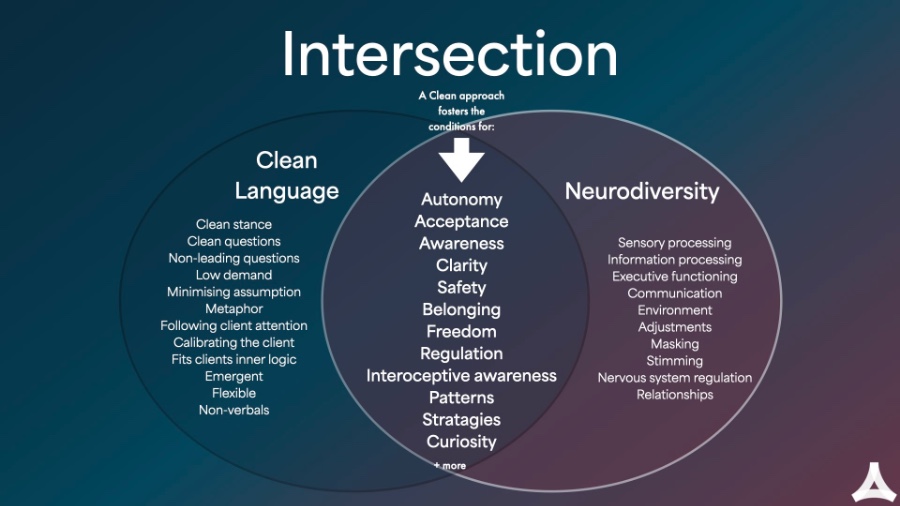
This Work Matters: Four Key Areas
When I think about applying Clean Principles in a neurodiversity context, four key areas stand out. These form a kind of ripple effect, from individual transformation to systemic change.
1. Enabling Better Outcomes for Neurodivergent People
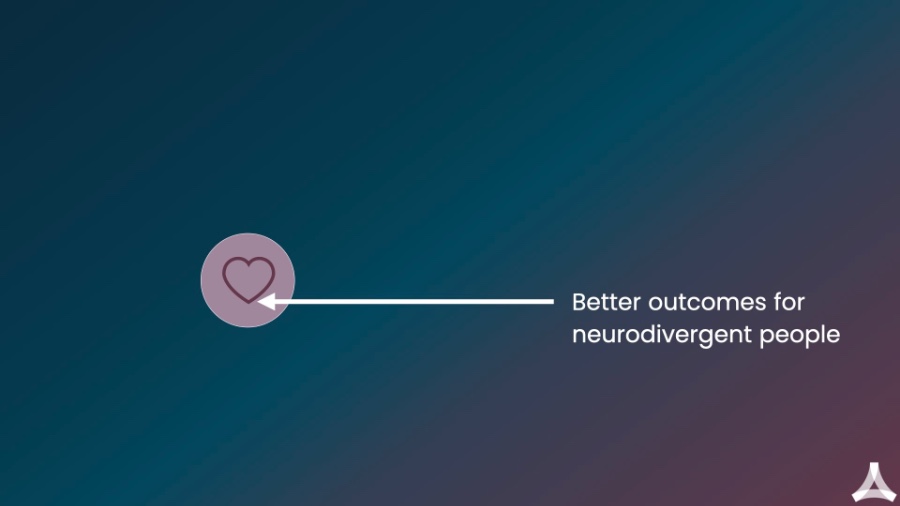
At the heart of all this work is a simple truth: neurodivergent people aren't broken. We don’t need fixing. We don’t need to change (unless we want to).
When we preserve someone's experience precisely as they express it, when we refrain from introducing our own assumptions, interpretations or meanings, when we invite them to attend to their experience without intending to change it — we create conditions for genuine self-discovery and self-acceptance.
This is what my clients tell me time and again.
2. Supporting Neuro-Inclusive Practice
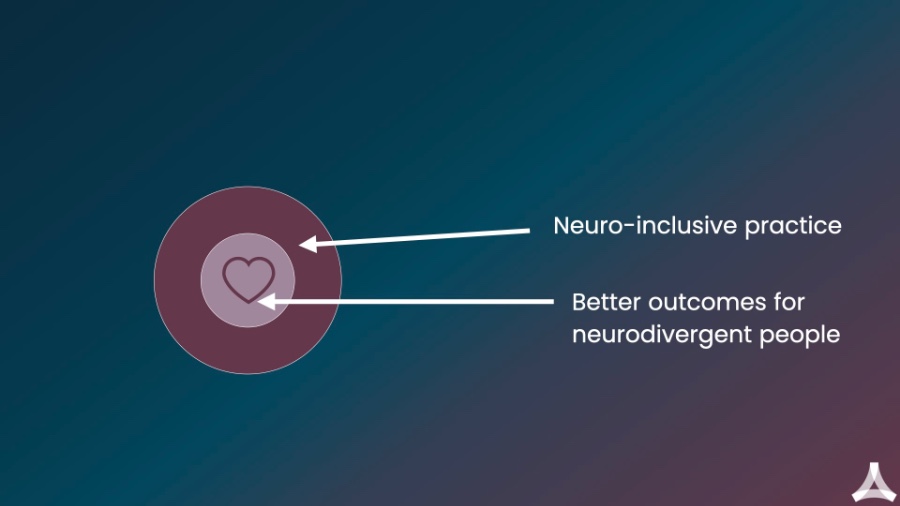
Clean Language principles aren't just valuable in one-to-one coaching — they have potential to transform how teams, families and organisations function.
During my Metaphorum session, Caitlin Walker described using clean approaches across teams, classrooms, and families to help people understand and share their “invisible architecture”. That really captures it.
In diverse teams where differences shape how people process information, communicate, and work, Clean Principles create a foundation for genuine inclusion. Rather than expecting neurodivergent team members to adapt to dominant ways of working, clean approaches invite everyone to articulate their needs, preferences, and patterns without judgment and with an awareness of their assumptions and bias.
This shifts the focus from accommodation (i.e. how do we help this person fit in?) to understanding (i.e. how does everyone here work at their best?). It's a subtle but profound difference.
3. Training Practitioners Differently
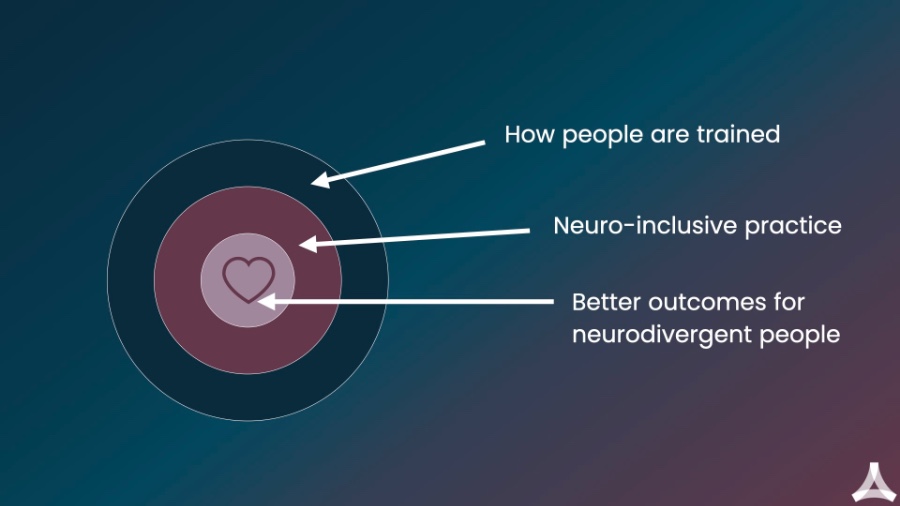
There are 2 things that really frustrate me about the neurodiversity coaching field:
- The wild differences in training to become a “neurodiversity coach”.
- How it's marketed and/or sold as 'strategies'.
Even Access to Work calls it 'workplace strategy coaching.' Yes, strategies can be useful — but only if the person actually wants them. And that's a big if.
What Clean Language offers is fundamentally different.
Rather than prescribing strategies, clean questions enable a person to discover how they actually work. This connects them with their inner wisdom, their inner resources, and crucially, their self-trust — which, especially for late-diagnosed individuals, may have been eroded through years of struggle, gaslighting and masking to fit in.
The use of Clean Language and the Clean Principles fits beautifully with the neurodiversity paradigm.
Neurodivergent people aren't broken and don't need fixing: being neurodivergent is just another way of being human – a natural diversity in thinking. We need to discover who we really are and how we work, so we can advocate for our needs and be at our best more of the time.
When we train people to become neurodiversity coaches using Clean Principles, we're teaching them to not know or unknow. We're teaching them to trust that the client is the expert on themselves. This is a radical departure from traditional coaching models that assumes the practitioner brings expertise about 'what works' or 'is correct' or 'needs to happen'.
4. Getting Clean Language Out in the World
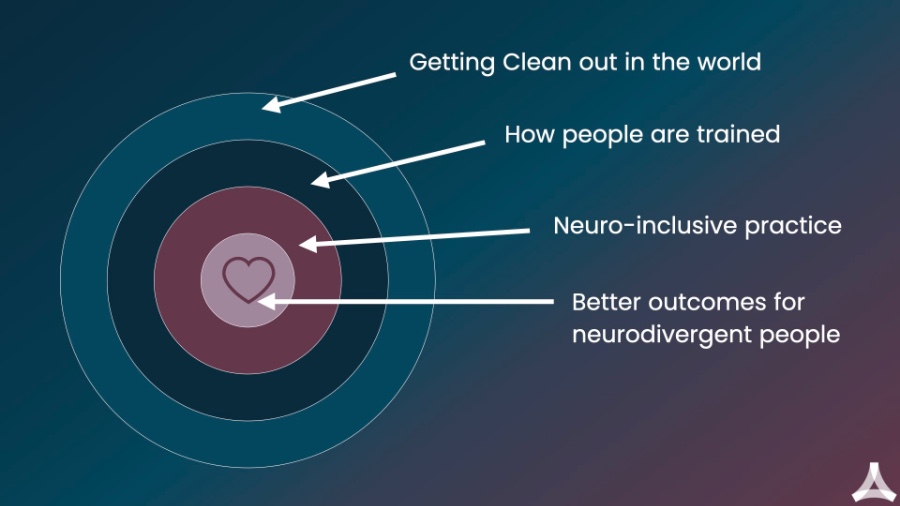
Clean Language is powerful, but it remained relatively unknown outside specialist circles.
Neurodiversity work offers a natural gateway for clean approaches to reach broader audiences. Why? Because the principles of Clean Language — preserving someone's experience, minimising assumptions, inviting attention without imposing change — align perfectly with what neurodivergent people need.
When neurodivergent clients experience the difference that a clean approach makes, they often become advocates for it. They recognise something unique: a way of being supported without being pathologised. Being accepted without imposing anything or requiring them to fit a neurotypical template. Instead, they are accepted as they are in their uniqueness.
What Clients Experience
From my own lived experience and from feedback I've gathered from clients, several themes emerge about what makes clean approaches so powerful in neurodiversity contexts.
Clients tell me they feel:
- Seen
- Accepted as they are
- Deeply listened to and truly heard
- Welcomed with all forms of their communication — verbal, non-verbal, the silence, the processing time
- That their way of thinking, being, and feeling is recognised as valid not ‘wrong’
"Coaching is realising you have the capability in yourself, it's not someone else telling you how to do it."
Client E, June 2025
There's neither necessity nor pressure to change, just presence to what is. The low-demand nature of clean questions means clients can develop awareness of their own patterns at their own pace, in their own way.
"I feel empowered from just this one session. I felt validated, understood and heard."
Claire Willetts, March 2024
The facilitator meets them in their world, without an agenda to fix or change them.
"You didn't tell me I was wrong or that I should be concentrating on something or someone else."
Cath Dipple, February 2025
These aren't small things. For neurodivergent people who may have spent years being told they need to change, who've masked their authentic selves to fit in, who've internalised messages that they need fixing — this experience of being met exactly as they are is transformational.
How I Think About My Practice: The Atom Metaphor
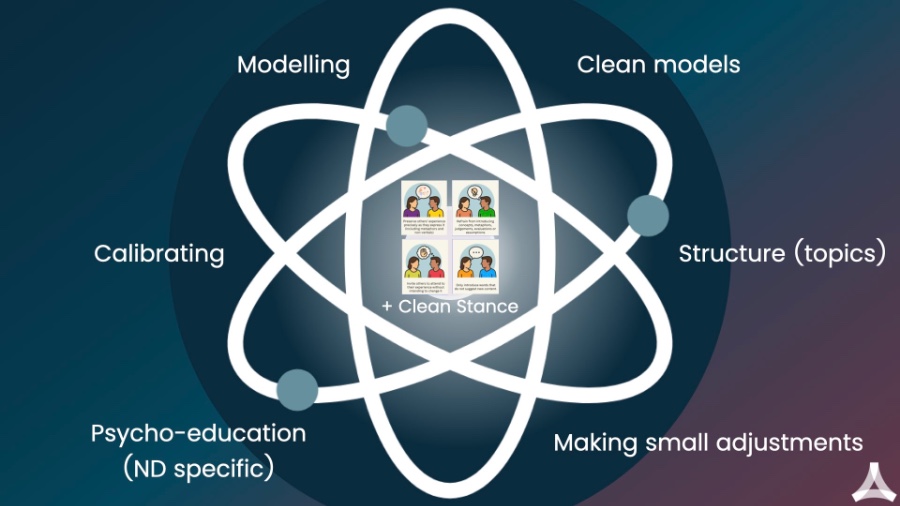
In my Metaphorum presentation, I shared a model I've developed for thinking about my practice. It came from self-modelling (something Clean Language taught me to do) — I found myself thinking visually, asking myself clean questions internally about how I work.
I see my practice as an atom.
At the nucleus sits a clean stance and the Clean Principles — always present, stable, constant. Everything else in my practice is organised around this core.
Moving outward from the nucleus, like electrons in their orbits, are different elements:
- Modelling
- Calibrating
- Clean models
- Psycho-education about neurodiversity
- Structure and topic guidance
- Making small adjustments
These elements move, shift and interact. They're responsive to what's happening in each moment with each client.
The closer to the nucleus I stay, the cleaner I'm being. The further out I move, the more I'm introducing content. But the nucleus is always there — it's what holds everything together.
Interestingly, my metaphors always tend to be physics-based — another glimpse into how my particular neurodivergent brain makes sense of the world.
Questions That Emerged
At Metaphorum, the conversation revealed both the breadth of interest in this work and the questions that remain. Participants wanted to know:
- How to work with people who don't access metaphor easily
- How to use open questions for those who need time to process
- When and how to introduce clean approaches
- Whether certain neurodivergent profiles might find metaphor overwhelming
These are important questions, and they're exactly the kind of nuanced, thoughtful inquiry this field needs.
One participant noted the importance of acceptance in Clean Language — not adding words, interpretations, or assumptions and helping the person develop their internal system. Another spoke about how it supports self-acceptance and autonomy. Another described how Clean approaches help individuals and groups understand their inner worlds.
What struck me most was the recognition that while we might be interested in 'labels' and traits, when working in metaphor or conceptual frameworks, they allow us to truly understand how each person's mind-body system actually works.
What Happens Next
More neurodivergent people need access to clean approaches. More practitioners need training in how to apply Clean Principles in this context. And more organisations need to understand how Clean Language can support truly neuro-inclusive cultures.
If you're a Clean Language practitioner curious about how these skills translate into neurodiversity work, or if you're already supporting neurodivergent clients and want to deepen your clean approach, I'd love to connect.
I'm assisting on the Clean Approaches for ADHD Coaches programme starting March 2026 with Caitlin Walker and Shaun Hotchkiss at Clean Learning. This training brings together Clean Language and working with neurodivergent individuals in a coaching context.
The intersection of Clean Language and neurodiversity isn't just about applying a methodology to a population.
It's about recognising a profound philosophical alignment.
Both are grounded in the belief that:
- People are the experts on themselves
- Diversity of experience is valuable
- Understanding — not fixing — is the goal
If you’re curious about Metaphorum 2026 you can find more details and booking options by clicking here.
Comments are closed on this post.